Our solution framework is based on years of experience and proven thought models in the areas of culture and leadership development

We perceive organizations
as living organisms

In an ever-changing environment, organizations face major challenges. To ensure long-term survival, they must demonstrate the adaptability and flexibility characteristic of living organisms.

In organizations, people come together within structures to pursue a common purpose. Human behavior, organizational structures, and purpose continuously influence one another.

‍

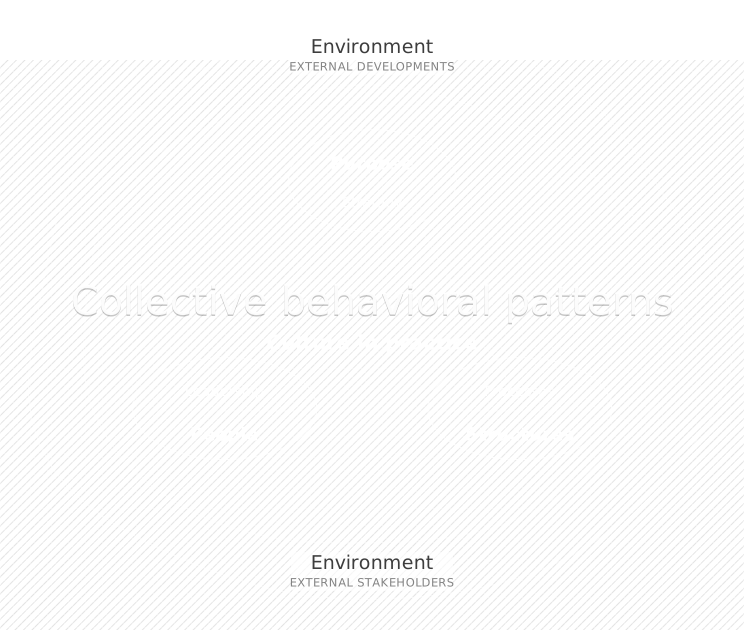
Every organization evolves over time—through intentional design as well as through unintentional actions and inaction. Purpose and Strategy, People and Leadership, and Structures and Processes constitute the model’s core organizational dimensions. Rather than operating in isolation, they shape the organization through their interaction.

‍

This interplay gives rise to recurring collective behavioral patterns. Taken together, they form the organization’s culture in practice. The influence runs both ways: How the organizational dimensions are configured and interact shapes the culture. That culture, in turn, influences how people behave, how structures function in practice, and how strategy is understood and executed. What matters, therefore, is how well the dimensions are aligned. As in an orchestra, it is not only the individual musicians who matter, but how well they play together.

‍

Every organization operates within a specific external environment. External developments and stakeholders create demands, opportunities, and areas of tension to which the organization must continually adapt. Internal fit must therefore be complemented by external fit: the organization must remain relevant and responsive to its environment—or, to extend the metaphor, its symphony must also resonate with the outside world.
‍

We make the ambigious phenomenon of "culture" visible and tangible

Many organizations continue to grapple with the idea of culture, particularly when compared to more concrete aspects such as strategy and structure. These topics are tangible, usually documented in writing, and thus more accessible. When people talk about culture, on the other hand, it often becomes vague and unclear. But it can be done differently!

Only a small part of culture is directly accessible and thus perceptible, for example, rules, symbols, the spatial language of buildings and offices, strategy, and organization charts. People provide another important insight. Their behavior leaves verbal and non-verbal traces everywhere, which says a lot about the culture of an organization.

‍

Yet, most cultural elements remain hidden like an iceberg under the water surface, such as values, attitudes, motives, beliefs, and convictions. These elements significantly shape the culture but are not visible.

We make the entire iceberg tangible

We make culture visible and discussable with our Good Practices, using various tools, that people can discuss their culture and thus make their iceberg more visible.

Mit unseren Good Practices schaffen wir auf Kundenseite ein gemeinsames Kulturverständnis und eine gemeinsame Kultursprache. Beides hilft, um den gesamten Eisberg sichtbar zu machen und damit Kultur gestaltbar zu machen.

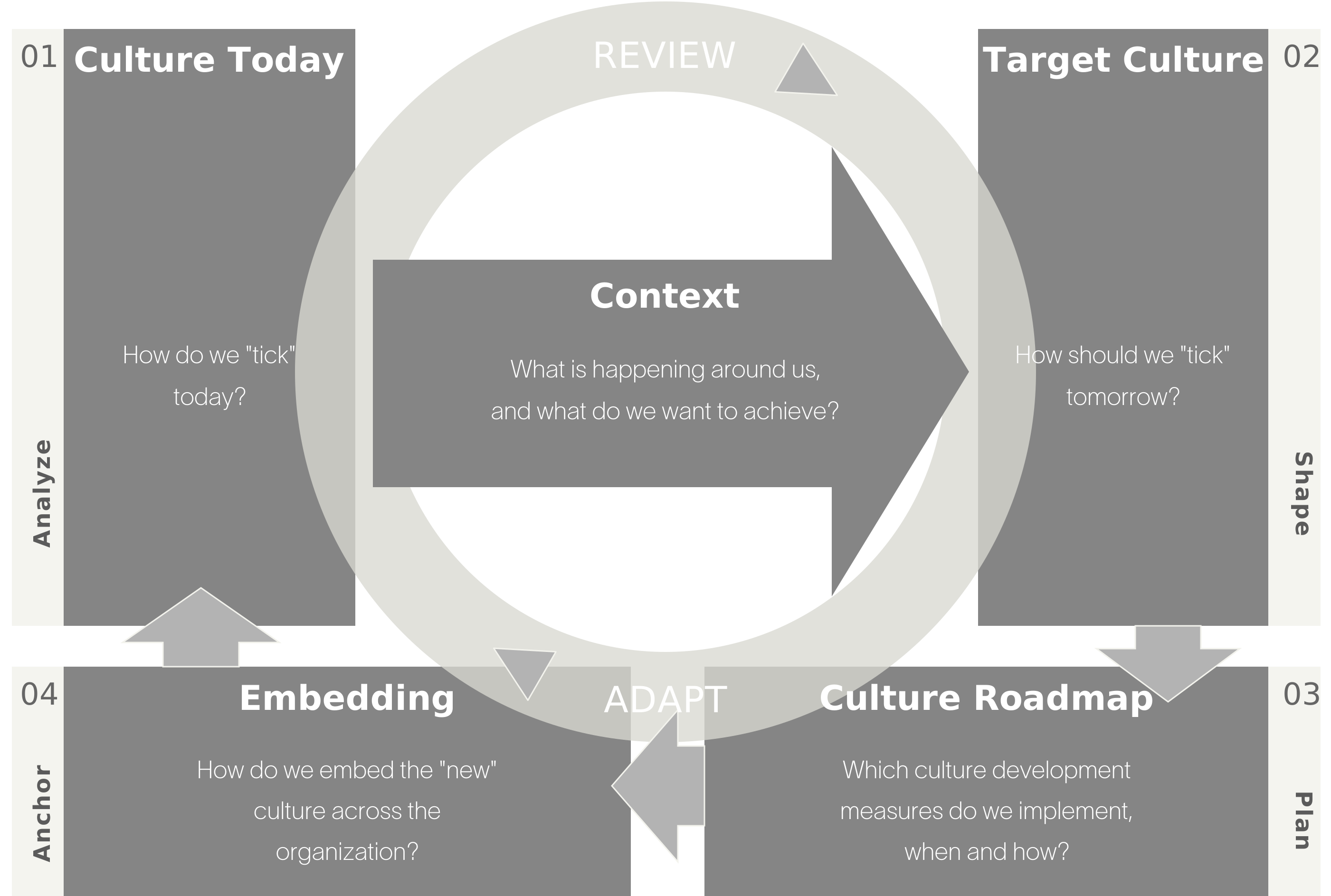
We enable sustainable culture development in four phases

We are convinced that organizations that do not actively engage with their culture and adapt it to changing context requirements will eventually become extinct. Against this backdrop, culture development becomes an important permanent task - but how does it work?

We accompany this process via exploratory interviews, online surveys, and compact workshop formats. We believe two aspects are particularly important: first, "cross-linking - tension - evaluation" (see Approach) and thus involving a “critical mass” of people, and secondly, a holistic approach focusing on issues like purpose, strategy, structures, processes, and leadership.

Phase 01: is aimed at understanding the current culture of the organization and reflecting on its strengths and weaknesses.

Phase 02: has the purpose of working out the future culture against the background of internal and external contextual requirements. On the one hand, the culture target picture describes which current patterns must be maintained and cultivated. On the other hand, it defines which new cultural patterns need to be developed to (continue to) be successful in the future. They are described in the form of culture directions that provide orientation.
‍
Phase 03: is aimed at developing a plan for the system-wide implementation of the culture target image. The Culture Roadmap includes all individual, collective and system-wide measures for the targeted development of the culture.

Phase 04: aims to successfully implement the culture development measures defined in the Culture Roadmap and thus to anchor the future culture throughout the system.

Review & Adapt: The entire process is supported by continuous reflection and adaptation. Changes in the organizational context, lessons from implementation, and new insights are reviewed regularly and fed back into the ongoing development of the culture. This keeps the Culture Journey closely aligned with the organization’s evolving reality and allows it to continuously develop over time.

We support leadership
in uncertain times

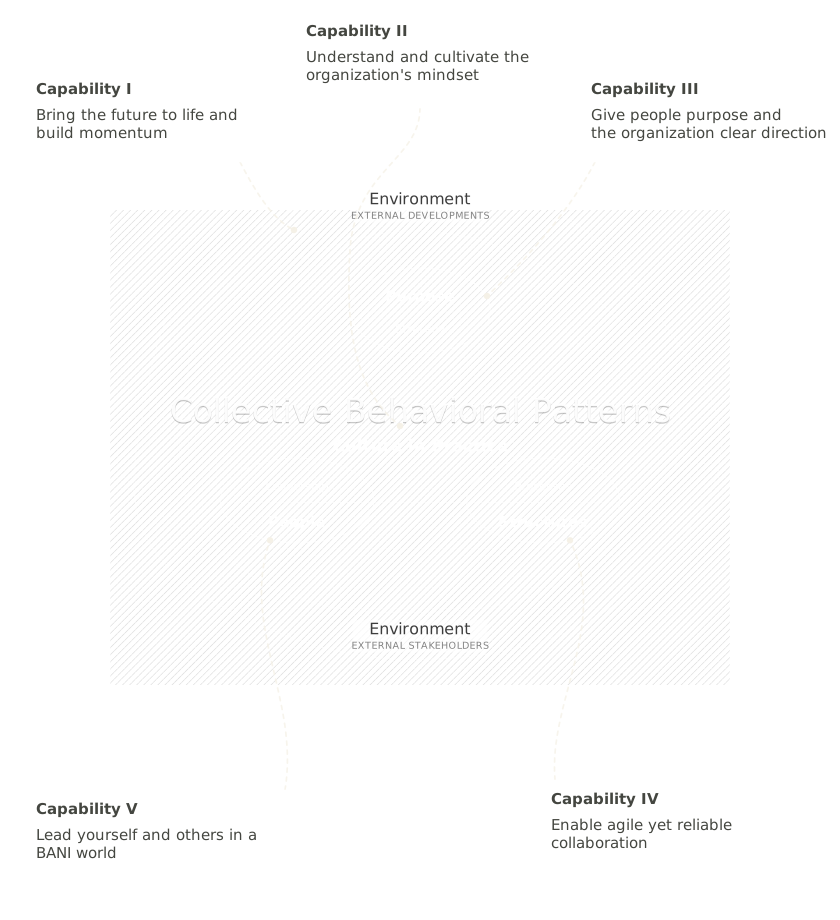
No culture development without people! The top management, leaders, and employees shape the culture of an organization. We believe that today's organization's leadership primarily needs to:

I Bring the future to life and build momentum.

II Understand and cultivate the organization's mindset.

III Give people purpose and the organization clear direction.

IV Enable agile yet reliable cooperation.

V Lead yourself and others in a BANI world.

‍

Our leadership programs and sparrings are precisely tailored to this.

‍